


Outdoor Play
At Rodborough Community Primary School, we believe that play is an essential part of childhood and a vital part of how children learn about themselves, others and the world around them.
We believe that children deserve time, space and freedom to play. Through play, children develop friendships, build confidence, explore their creativity, overcome challenges and learn to understand the world around them.
We want our playground to be a place of possibility, where children feel safe, valued and inspired to follow their interests, make discoveries and create their own adventures.
We recognise that play does not always need an adult-led purpose or a predetermined outcome. Some of the most meaningful learning happens when children are given the freedom to make their own decisions, follow their curiosity and learn through experience.
Our approach is built around the following beliefs:
Every child deserves the opportunity to play
We believe play is a fundamental part of every child's childhood. All children should have regular opportunities to enjoy play that supports their happiness, health, development and wellbeing.
Children should have ownership of their play
We value children's choices and give them the freedom to decide what they play, how they play and who they play with. We encourage independence and respect their individual interests and ideas.
Children are the leaders of their own play
We believe children learn best when they can take the lead. We provide opportunities, resources and encouragement, allowing children to develop their own ideas, solve problems and shape their experiences.
Challenge helps children grow
We understand that children need opportunities to experience challenge, uncertainty and manageable risk. By exploring their own capabilities and learning to assess situations, children develop confidence, resilience, judgement and independence.
Our environment should inspire possibilities
We aim to create outdoor spaces that are exciting, varied and ever-changing. Natural materials, open-ended resources and flexible spaces allow children to explore, experiment, build, invent and discover.
Every child belongs
We believe play should be accessible, welcoming and meaningful for everyone. We celebrate differences, remove barriers and provide opportunities for all children to participate, contribute and experience the joy of play.
Adults make play possible
Our role is to create the conditions in which great play can happen. We observe, encourage, support and guide when appropriate. We understand when to step in and when to step back, giving children the time and freedom to develop their own play.
How Our Outdoor Environment Supports the Many Ways Children Play
We recognise that children play in many different ways and that no two play experiences are ever quite the same. Our outdoor spaces, equipment and natural resources provide children with opportunities to explore, experiment, imagine, create, move, collaborate and challenge themselves.
We understand that one resource can support many different types of play. A plank might become a bridge, a balance beam, part of a den or a ramp for an experiment. We encourage children to use their imagination and make their own decisions about how they use the resources available to them.
16 Types of Play in Practice
There are 16 recognised types of play. The following are examples which demonstrate how our school environment supports a rich variety of play experiences.
Symbolic Play – Using Imagination and Representation
Children use objects, materials and actions to represent something else, giving everyday items new meaning.
How we provide for this:
- Loose parts become food, money, tools or treasure.
- Sticks and natural materials become magical objects, wands or imaginary equipment.
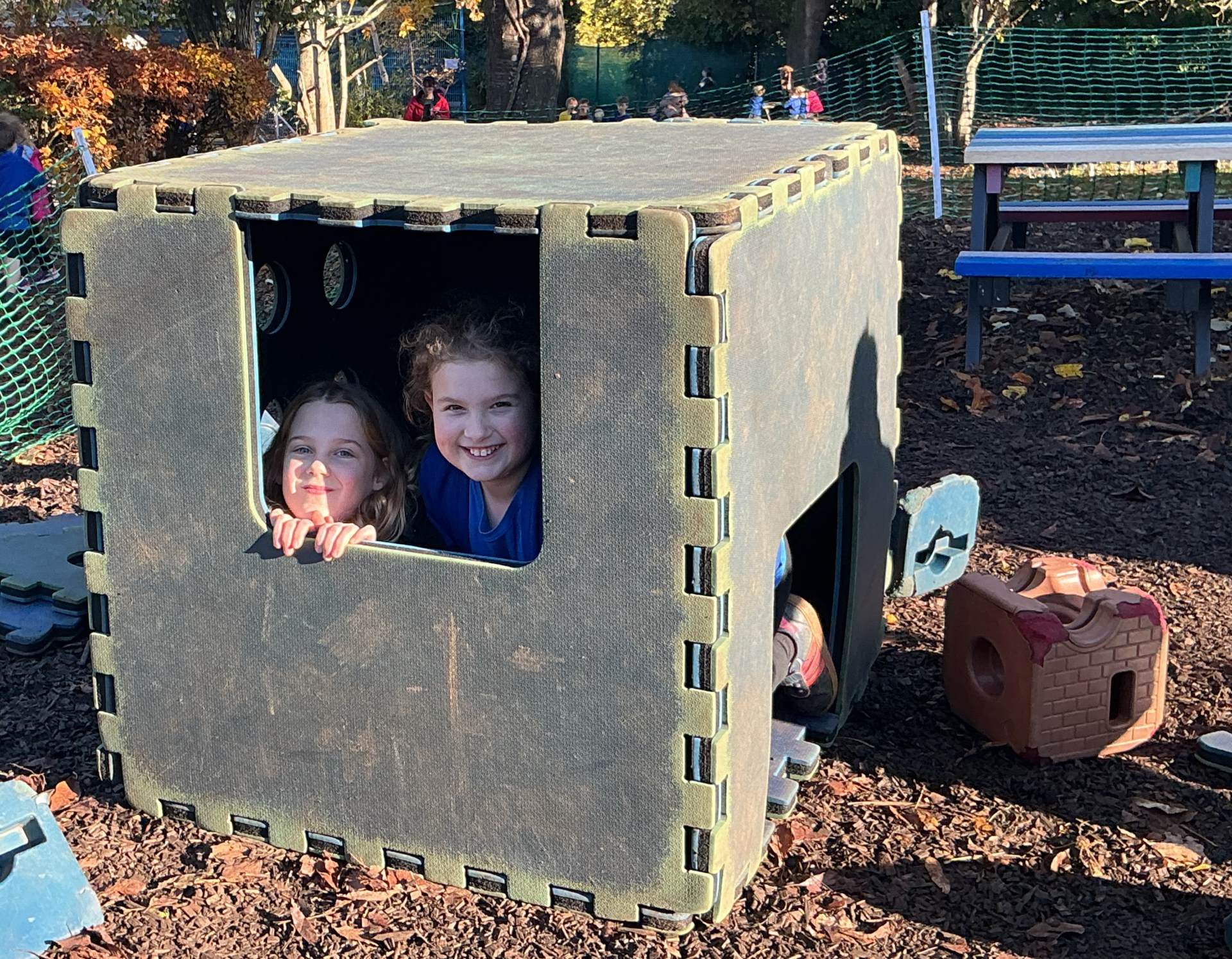
- Giant building blocks become vehicles, houses or other imagined objects.
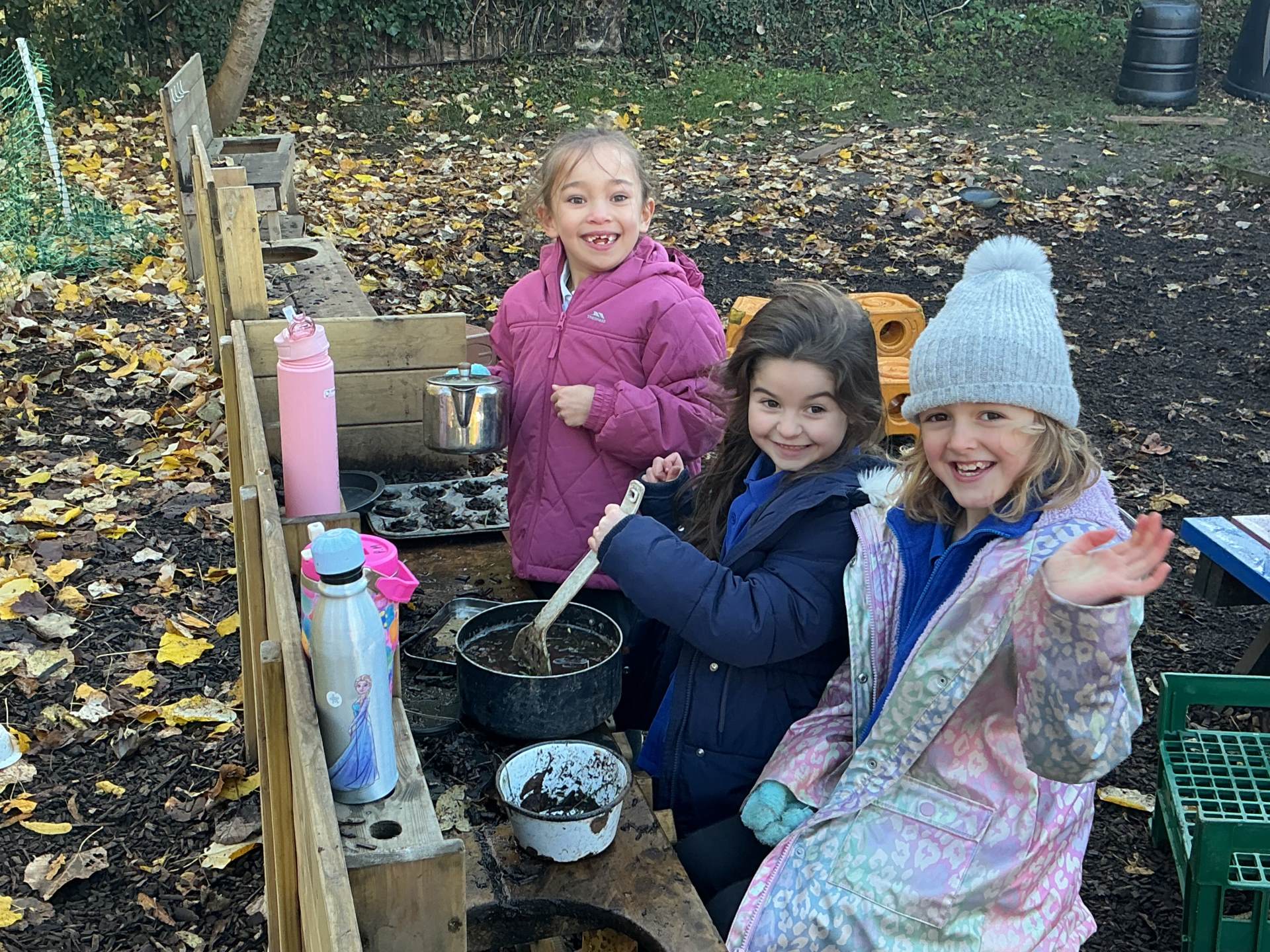
- Podley and the mud kitchen provide opportunities for children to create their own imaginary scenarios.
Rough and Tumble Play – Physical Interaction and Playful Challenge
Children enjoy energetic physical play, testing their strength, coordination and physical abilities through consensual play with others.
How we provide for this:
- Open outdoor spaces for chasing and tagging games.
- Balls and hoops for energetic group activities.
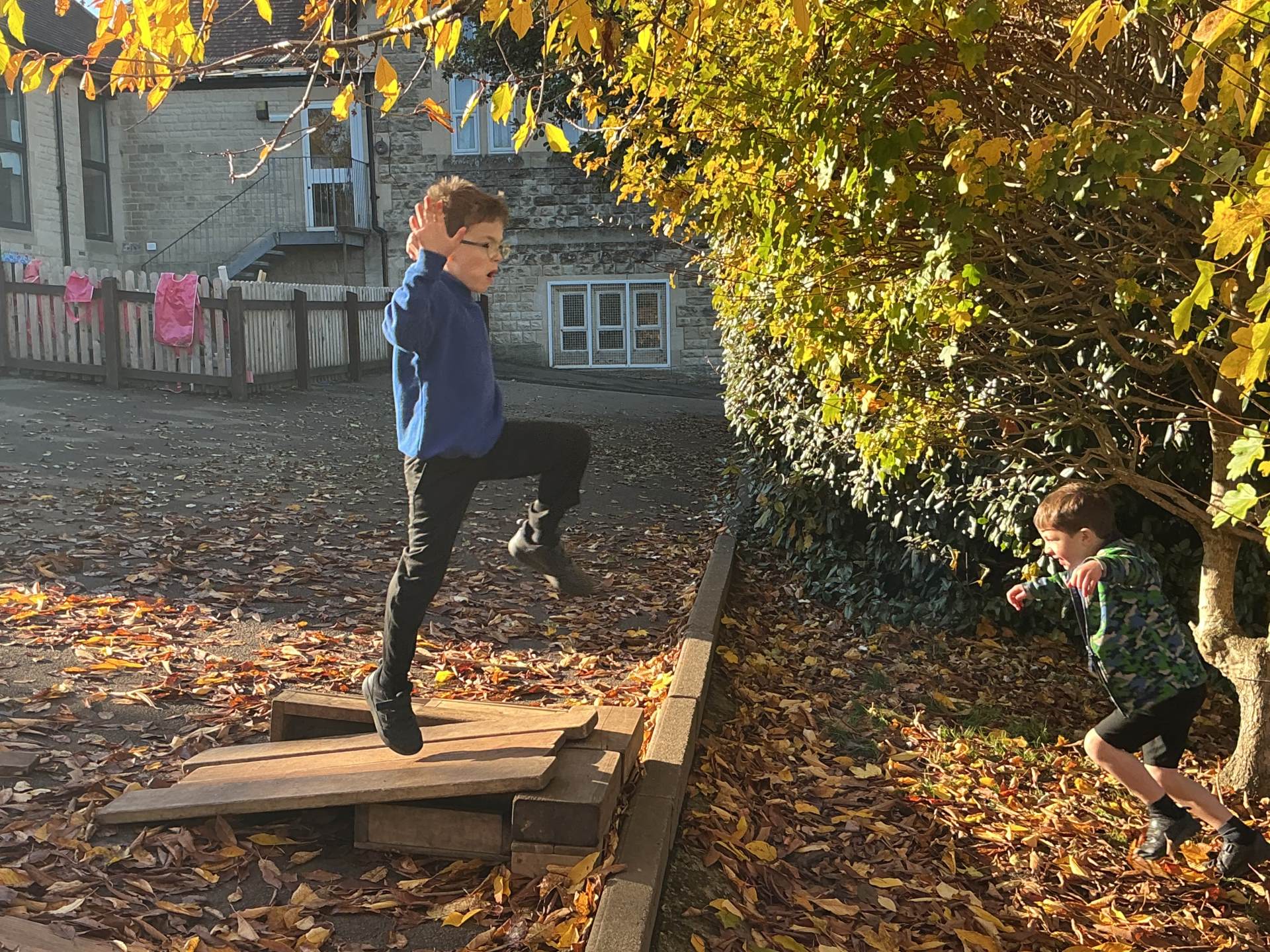
- Obstacle course materials for physical challenges.
- Opportunities for children to develop their understanding of personal space, boundaries and playing safely with others.
Socio-Dramatic Play – Acting Out Everyday Experiences
Children recreate familiar experiences and everyday situations, often taking on different roles and working together to develop their own stories.
How we provide for this:
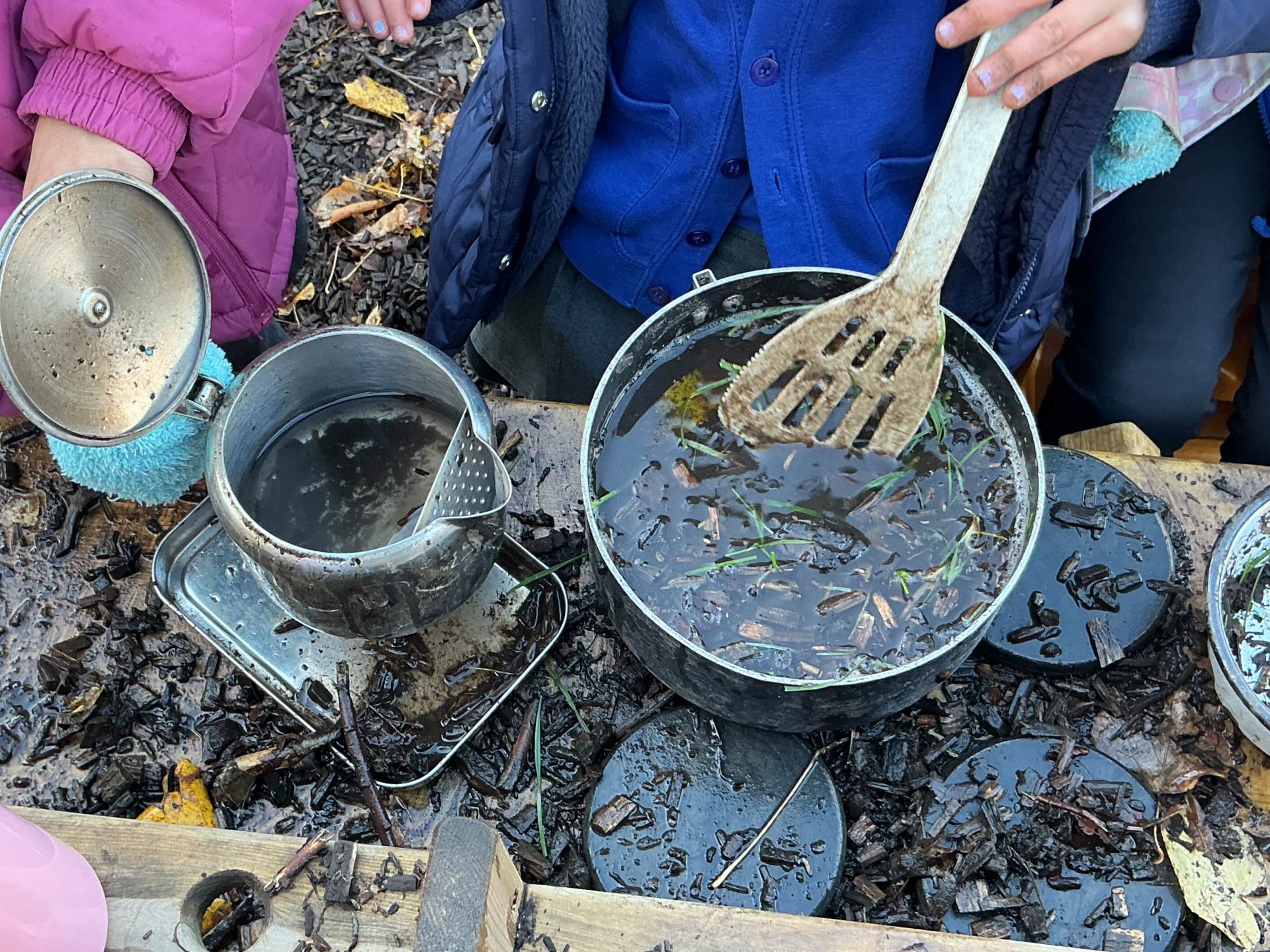
- Our mud kitchen encourages children to play at cooking, running restaurants and preparing meals.
- Podley provides opportunities for imaginative everyday scenarios.
- Den-building areas become homes, shops, schools or other familiar places.
- Loose parts and giant building blocks provide resources for creating and developing imaginary settings.
Social Play – Learning and Playing Together
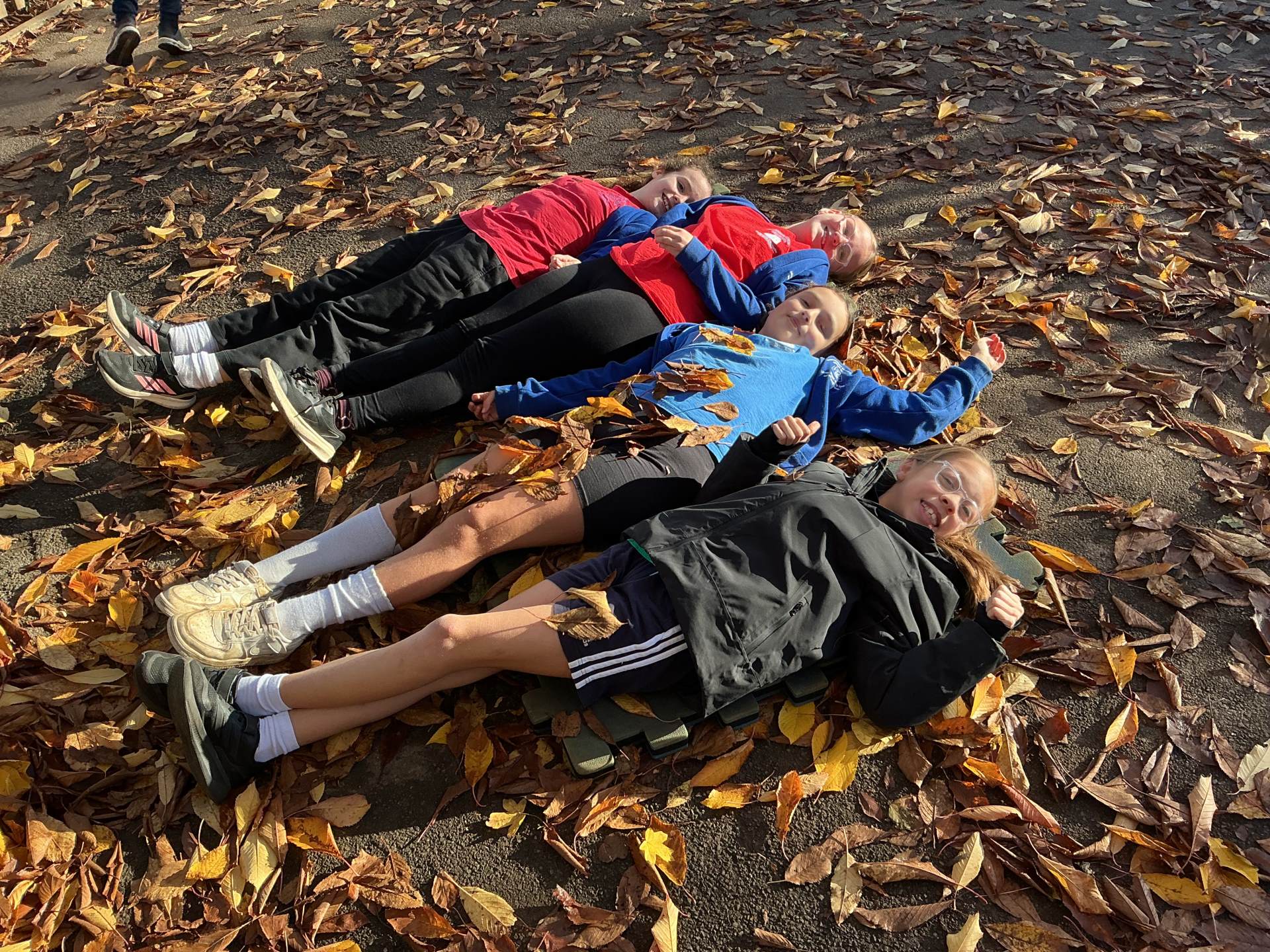
Children develop friendships, communication skills and social understanding through shared experiences, cooperation and negotiation.
How we provide for this:
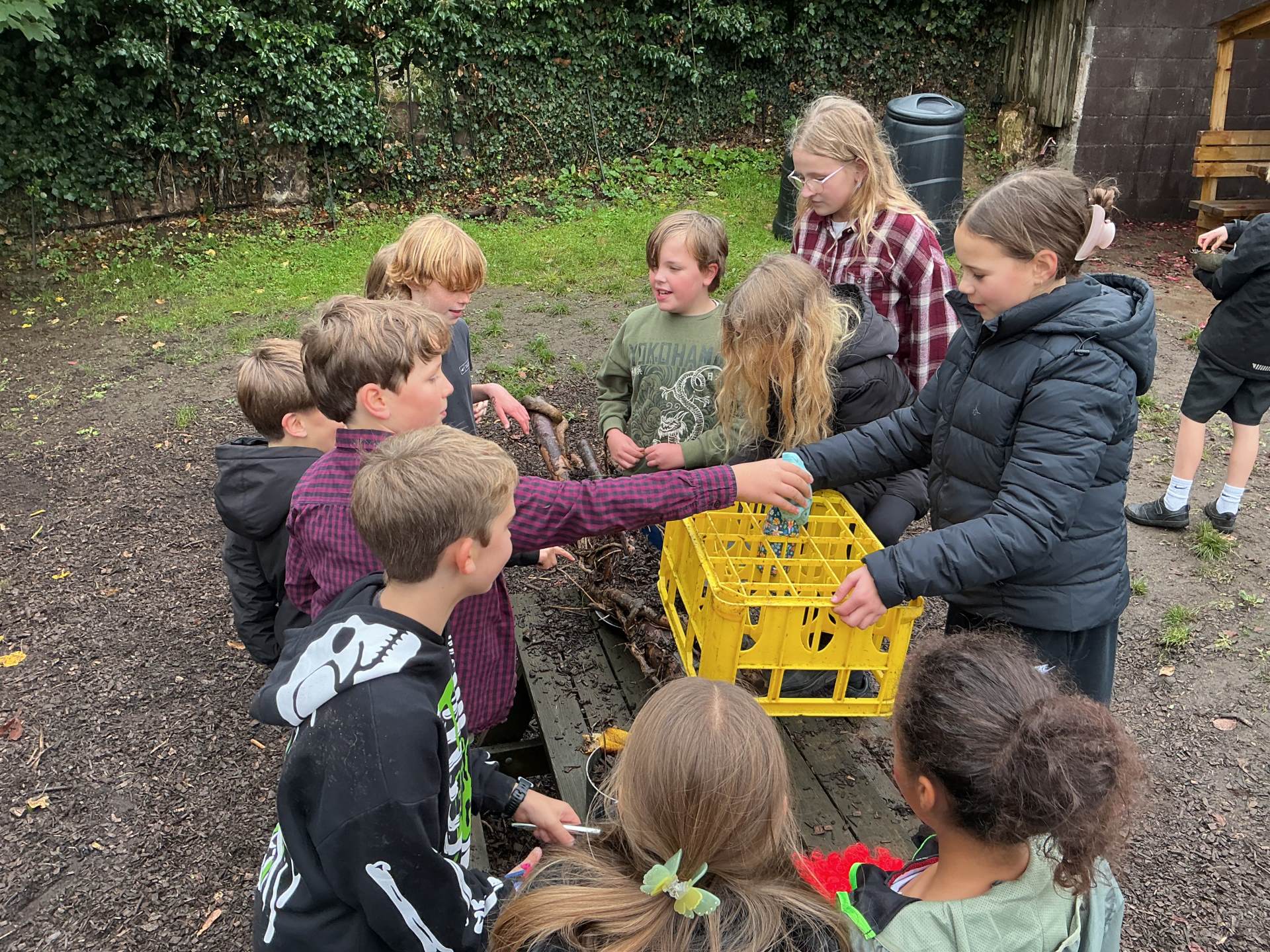
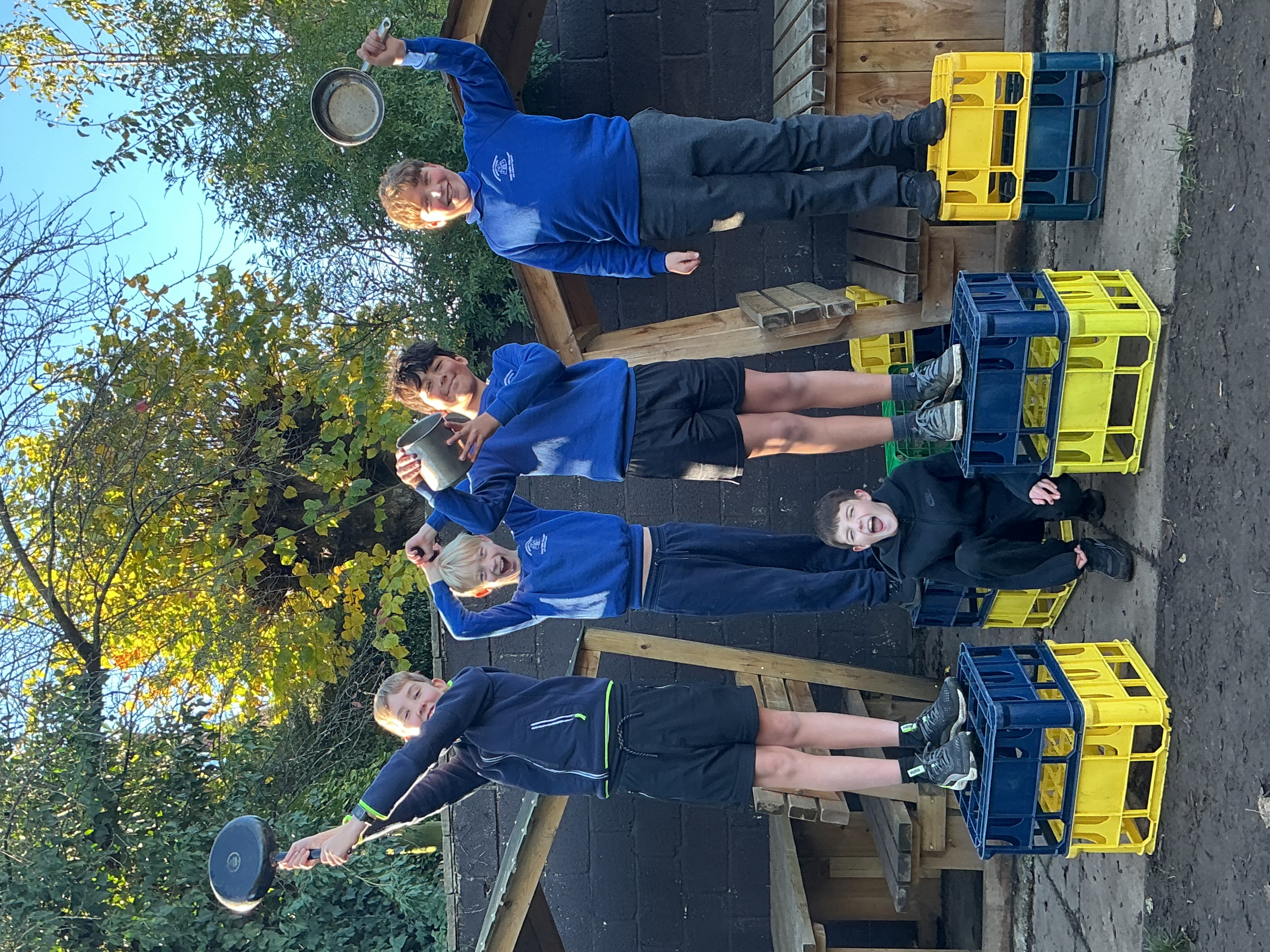
- Collaborative den building using planks, crates and loose parts.
- Team games involving football, basketball and netball.
- Shared activities in the sandpit and mud kitchen.
- Group challenges using obstacle course equipment.
- Opportunities to negotiate rules, take turns, share resources and resolve disagreements.
Creative Play – Making, Inventing and Creating
Children experiment with materials, develop ideas and create something new, often without knowing what the finished result will look like.
How we provide for this:
- Loose parts for designing, constructing and inventing.
- Giant building blocks for large-scale creations.
- Planks and crates for constructing structures.
- Sand and water for experimenting with textures, shapes and designs.
- Natural materials from our Forest School area for creative exploration.
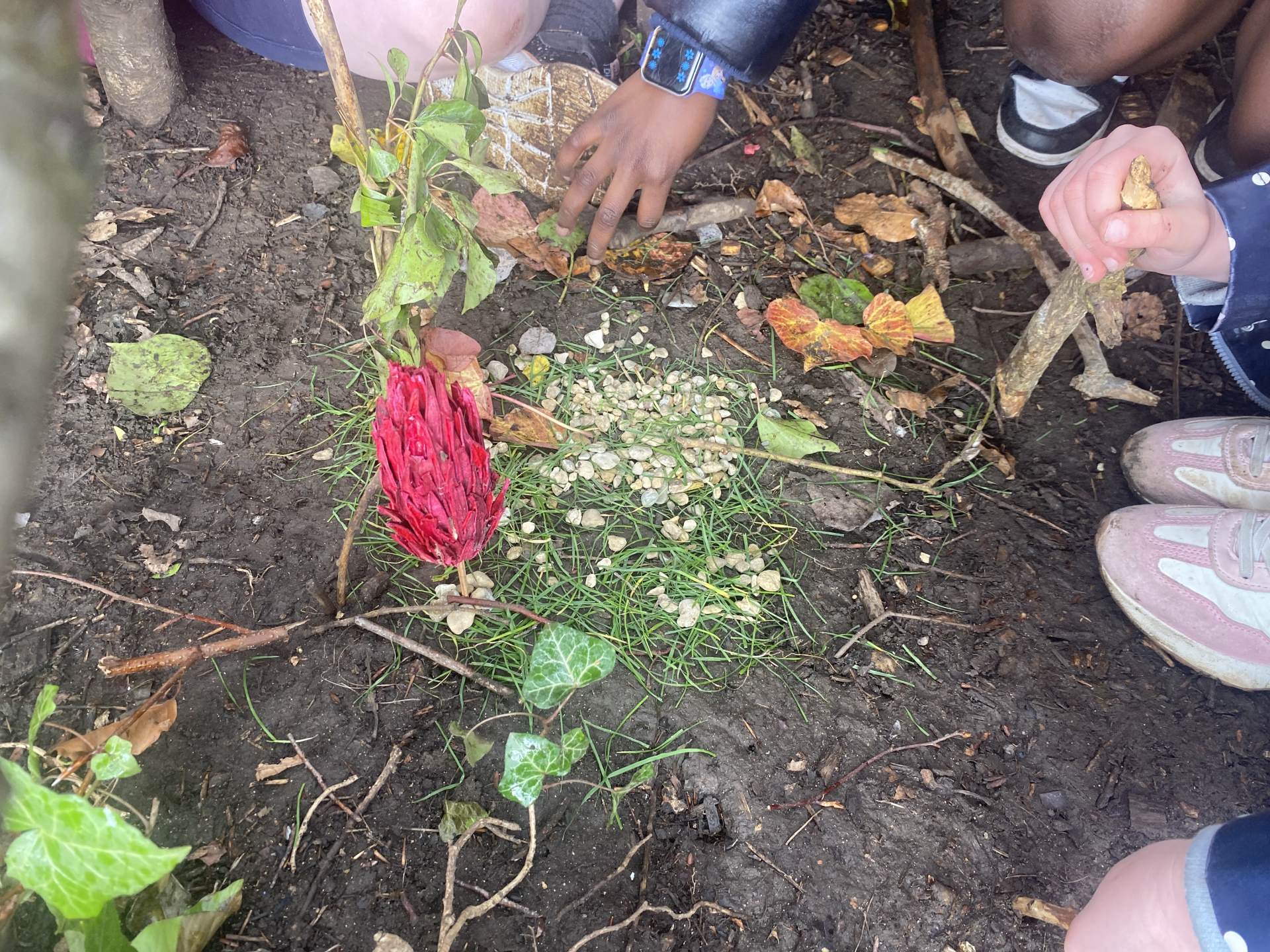
Communication Play – Expressing Ideas and Connecting with Others
Children communicate through talking, singing, joking, storytelling, gestures, movement and body language.
How we provide for this:
- Collaborative building and den-making encourages discussion and planning.
- Role play in Podley and the mud kitchen encourages conversation and storytelling.
- Team sports provide opportunities for children to communicate, encourage and organise one another.
- Group games involving skipping ropes, hoops and balls encourage interaction and shared understanding.
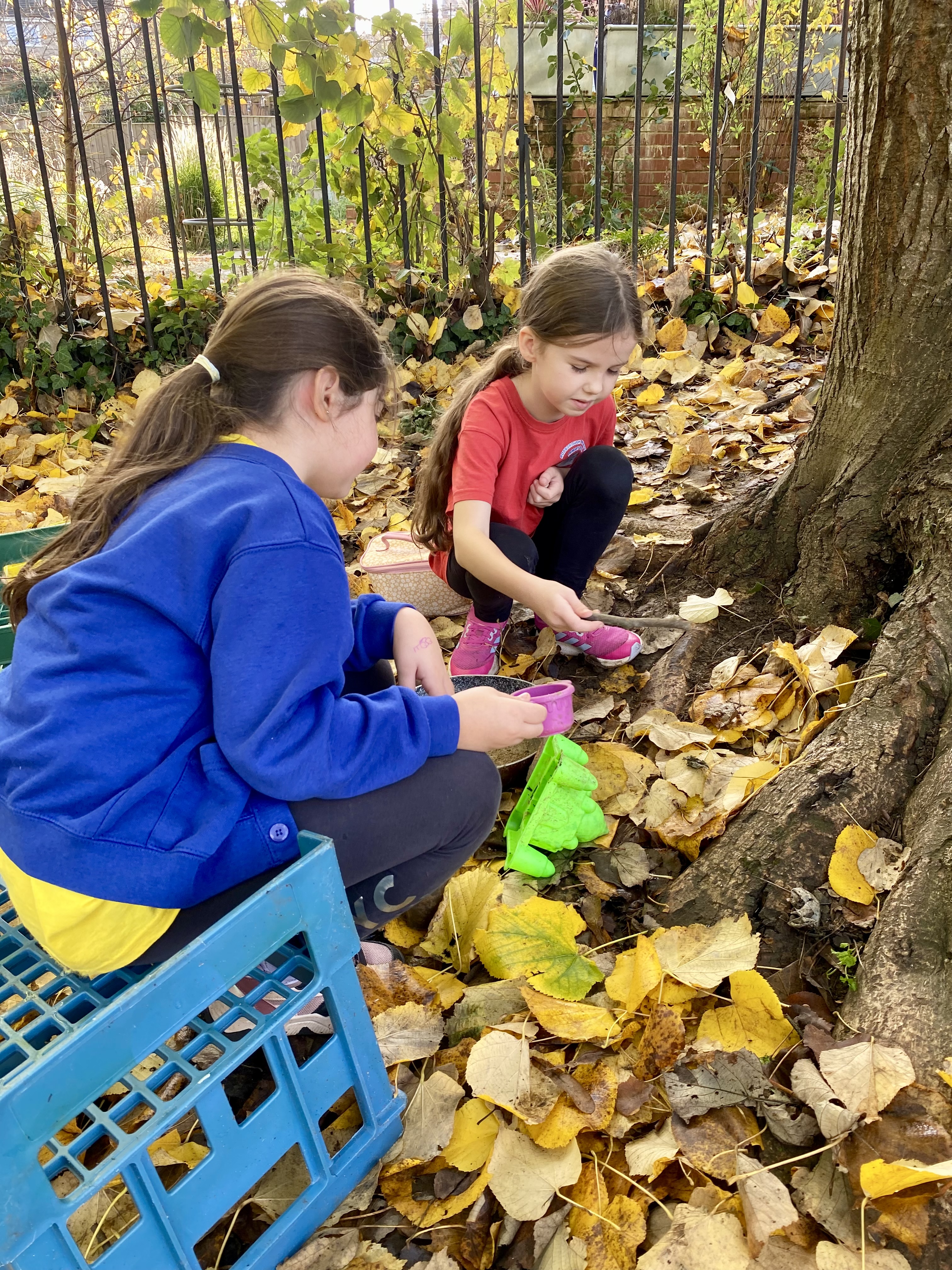
Dramatic Play – Performing and Bringing Stories to Life
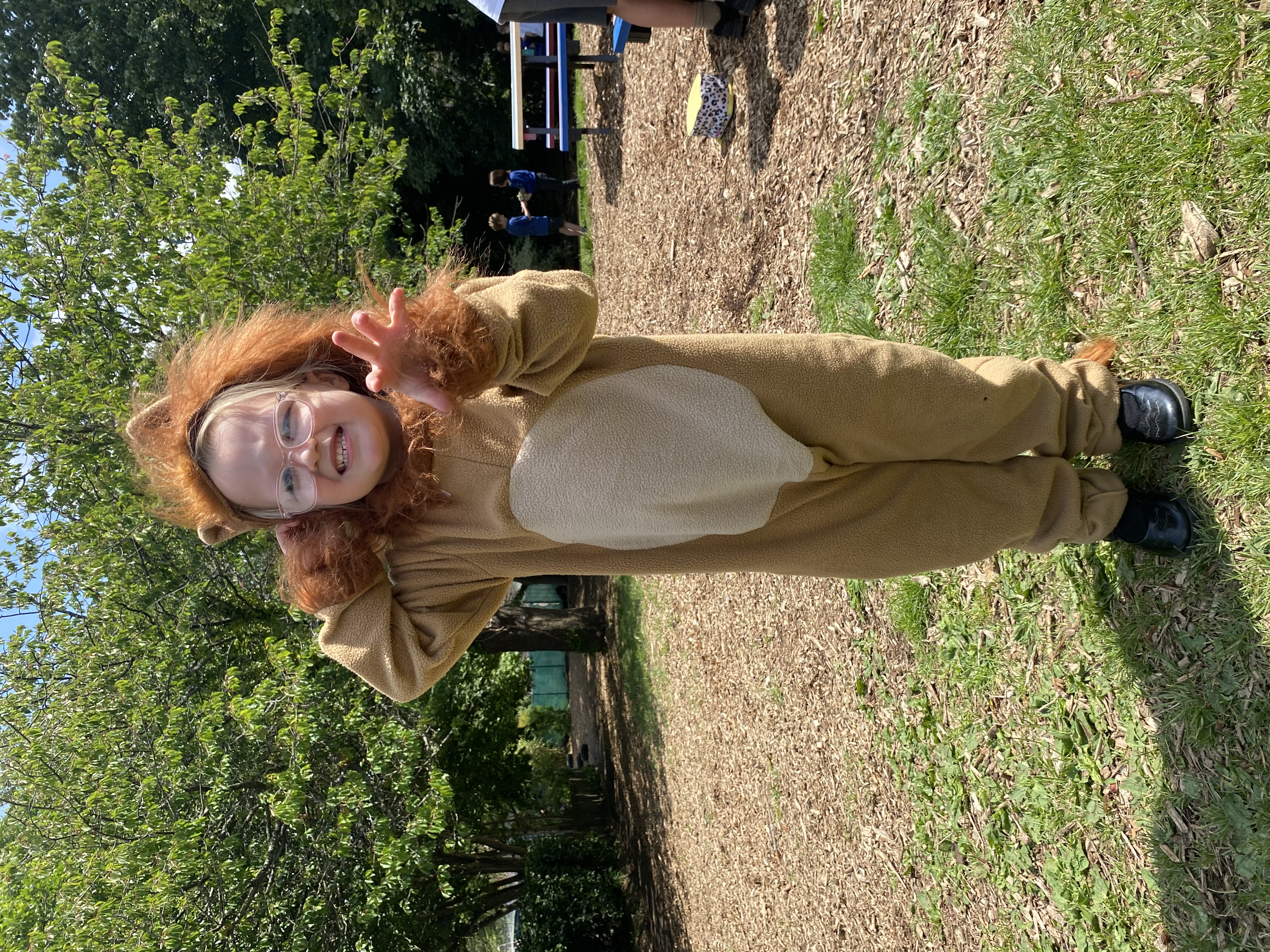
Children express themselves through acting, performing and recreating stories, characters and events.
How we provide for this:
- Den-building areas provide spaces for creating stages and performance areas.
- Podley encourages children to develop characters and imaginative situations.
- Giant building blocks and loose parts allow children to create settings for their performances.
- The Forest School area provides a natural backdrop for storytelling and imaginative adventures.
- Dressing up clothes allow children to become different charactors.
Locomotor Play – Moving for the Joy of Movement
Children enjoy moving their bodies in different ways, developing coordination, balance, strength and physical confidence.
How we provide for this:
- Our trim trail provides opportunities for balancing, climbing and negotiating physical challenges.
- The climbing wall encourages climbing and movement.
- Trees offer opportunities for climbing where appropriate and under agreed safety arrangements.
- Balls, hoops and skipping ropes support a variety of movement games.
- Obstacle course materials allow children to create their own physical challenges.
- Giant spinning tops offer opportunities for movement, balance and coordination.
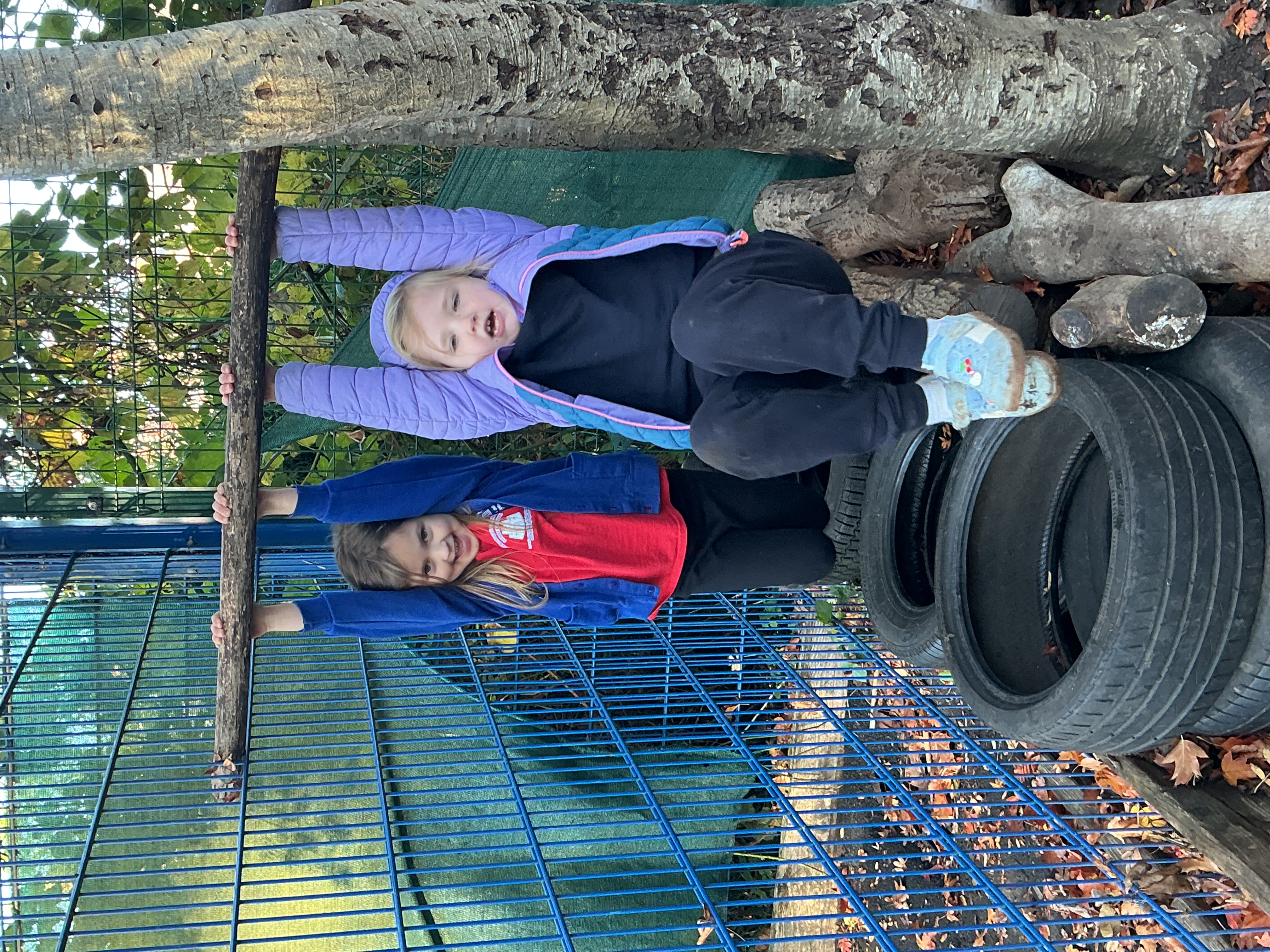
Deep Play – Exploring Challenge and Overcoming Fears
Children experience excitement, uncertainty and manageable risk as they test their abilities, explore their boundaries and develop confidence.
How we provide for this:
- Climbing trees offers opportunities to experience height and assess personal ability.
- The climbing wall allows children to develop confidence and physical control.
- The trim trail provides graduated physical challenges.
- Den building with planks and crates encourages children to consider stability and construction.
- Forest School activities provide opportunities to explore nature and experience appropriate challenges.
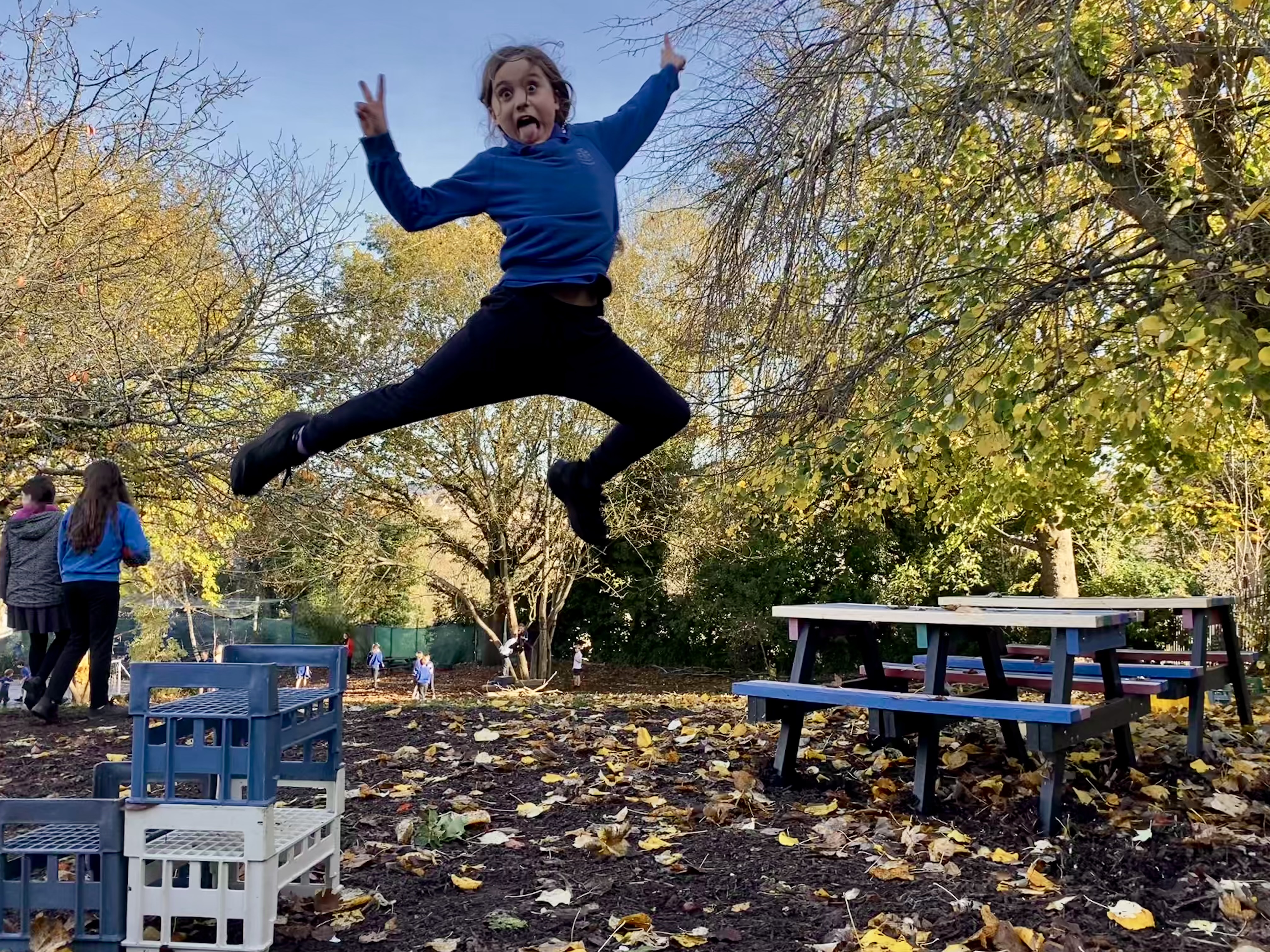
Exploratory Play – Investigating and Discovering
Children investigate the world around them using their senses, experimenting with materials and discovering how things work.
How we provide for this:
- The sandpit provides opportunities for digging, pouring, shaping and investigating.
- Water play encourages exploration of flow, capacity, movement and cause and effect.
- The mud kitchen allows children to mix, measure and experiment with textures.
- Our Forest School area encourages investigation of natural materials, plants and the environment.
- Loose parts provide opportunities for sorting, handling, comparing and exploring.
- Giant spinning tops allow children to investigate movement, speed and balance.
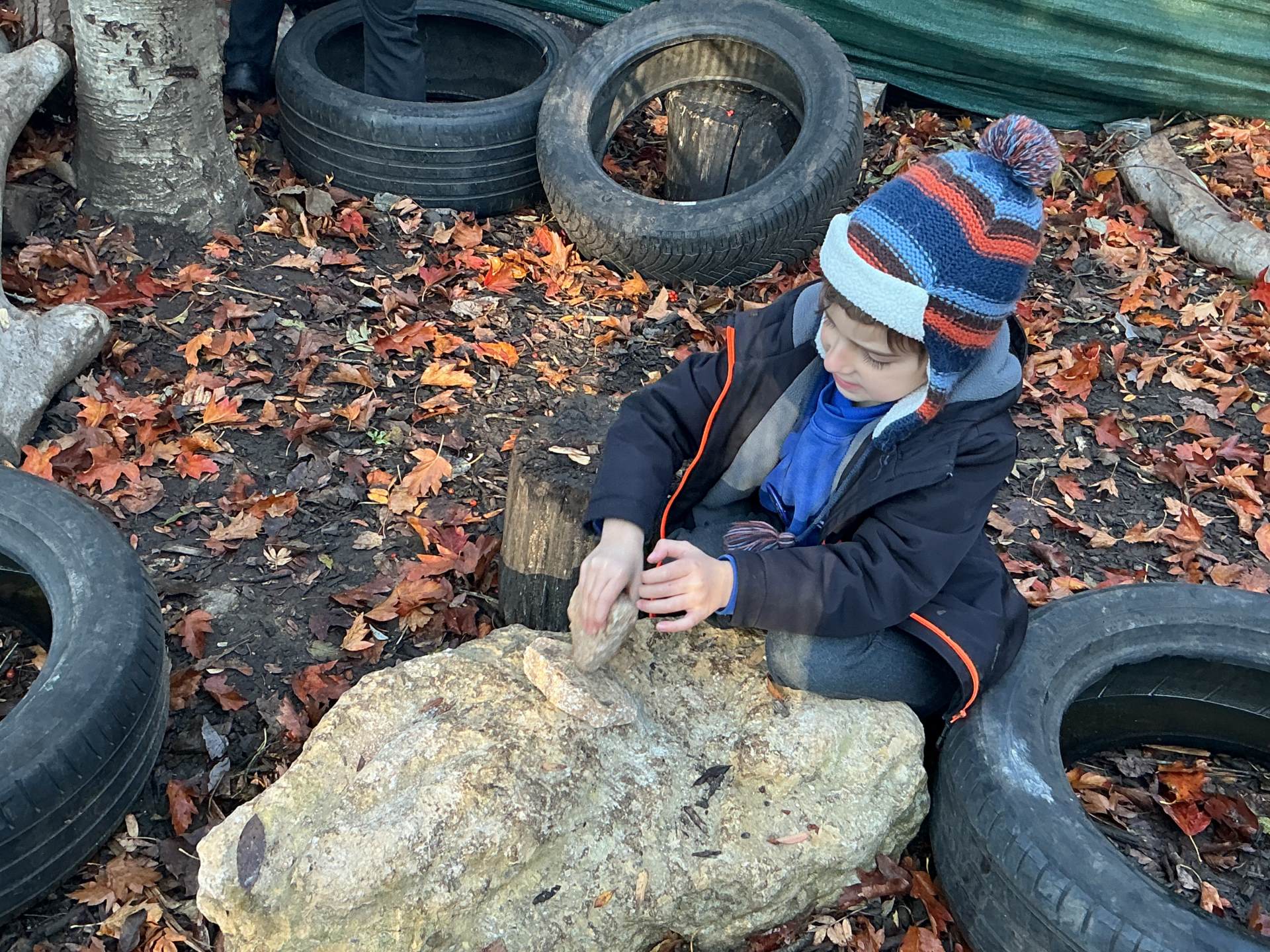
Fantasy Play – Creating Imaginary Worlds
Children create imaginary worlds and scenarios that go beyond everyday experiences, allowing their ideas and imagination to flourish.
How we provide for this:
- Den-building areas become castles, secret hideaways, spaceships or magical worlds.
- Podley provides a starting point for imaginative adventures.
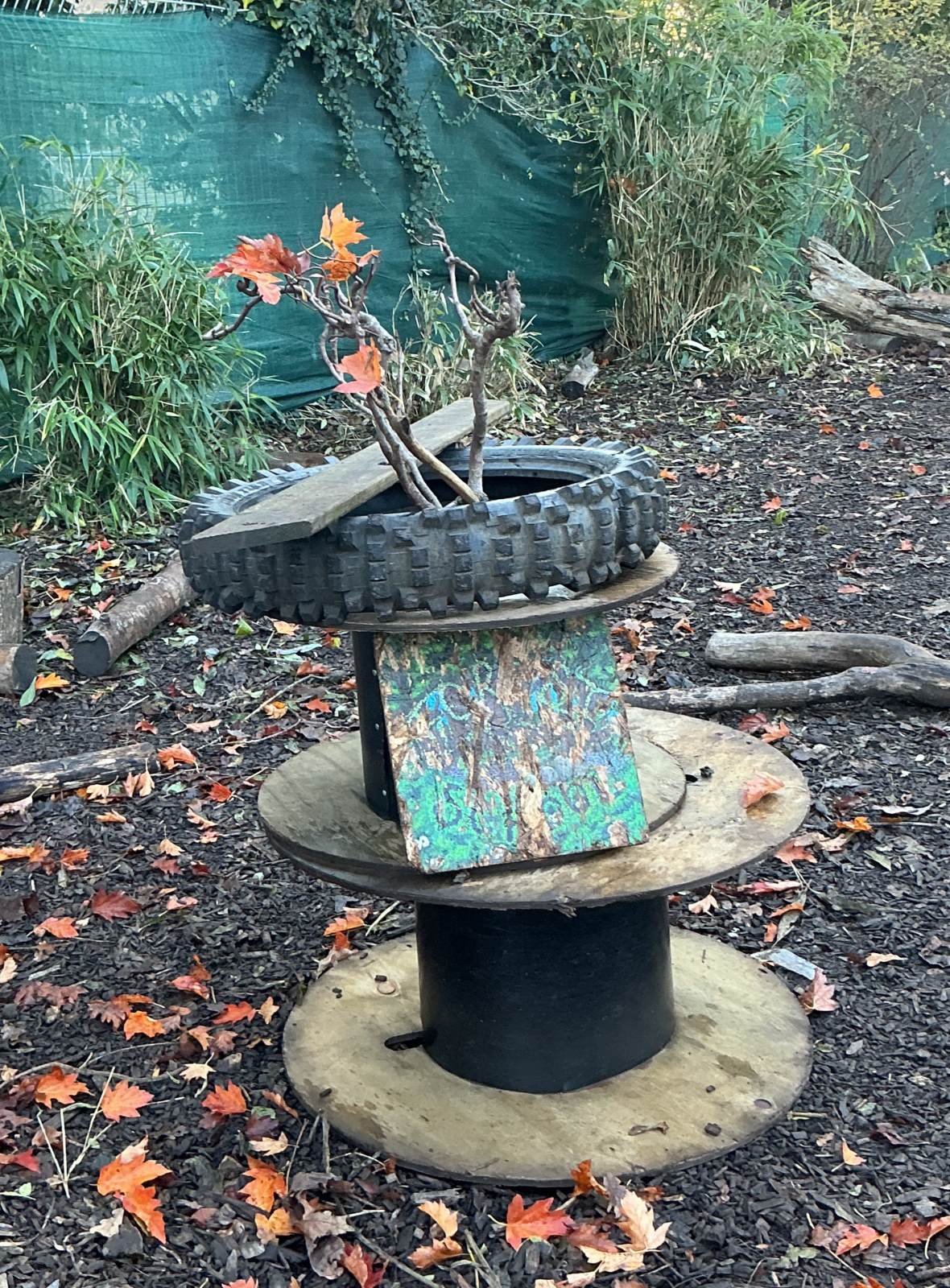
- Loose parts and natural materials become treasures, magical objects and imaginary resources.
- The Forest School area provides opportunities for woodland adventures and storytelling.
- Giant building blocks allow children to construct their own fantasy environments.
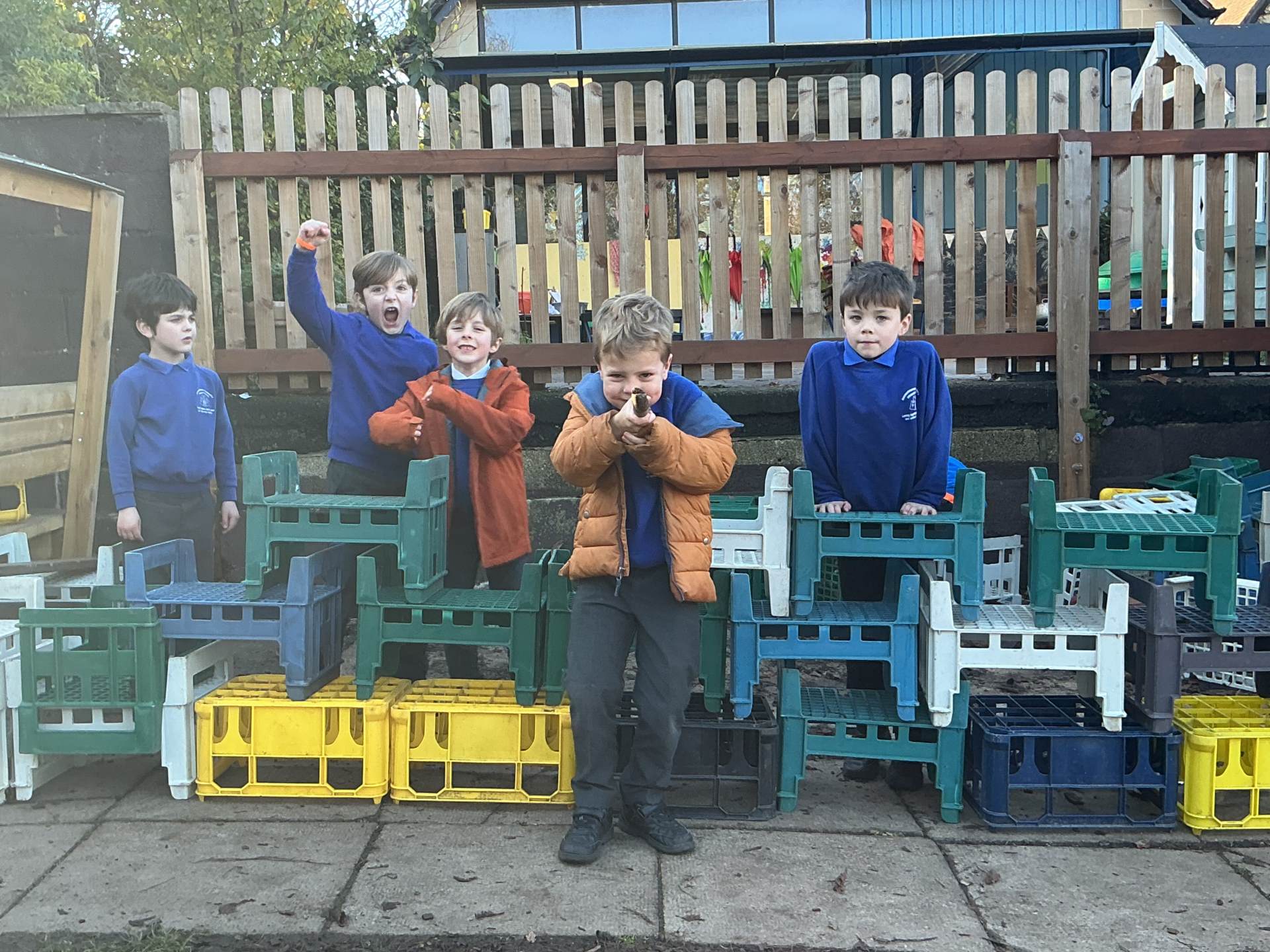
Imaginative Play – Exploring Possibilities Beyond Reality
Children explore ideas that are not restricted by the rules of the everyday world. They might become animals, superheroes, explorers or entirely imaginary characters.
How we provide for this:
- Forest School encourages children to imagine and explore different worlds.
- Den building provides spaces for creating imaginary homes and hideaways.
- Loose parts become anything children can imagine.
- Planks, crates and giant building blocks allow children to bring their ideas to life.
- Podley encourages children to develop their own imaginary adventures.
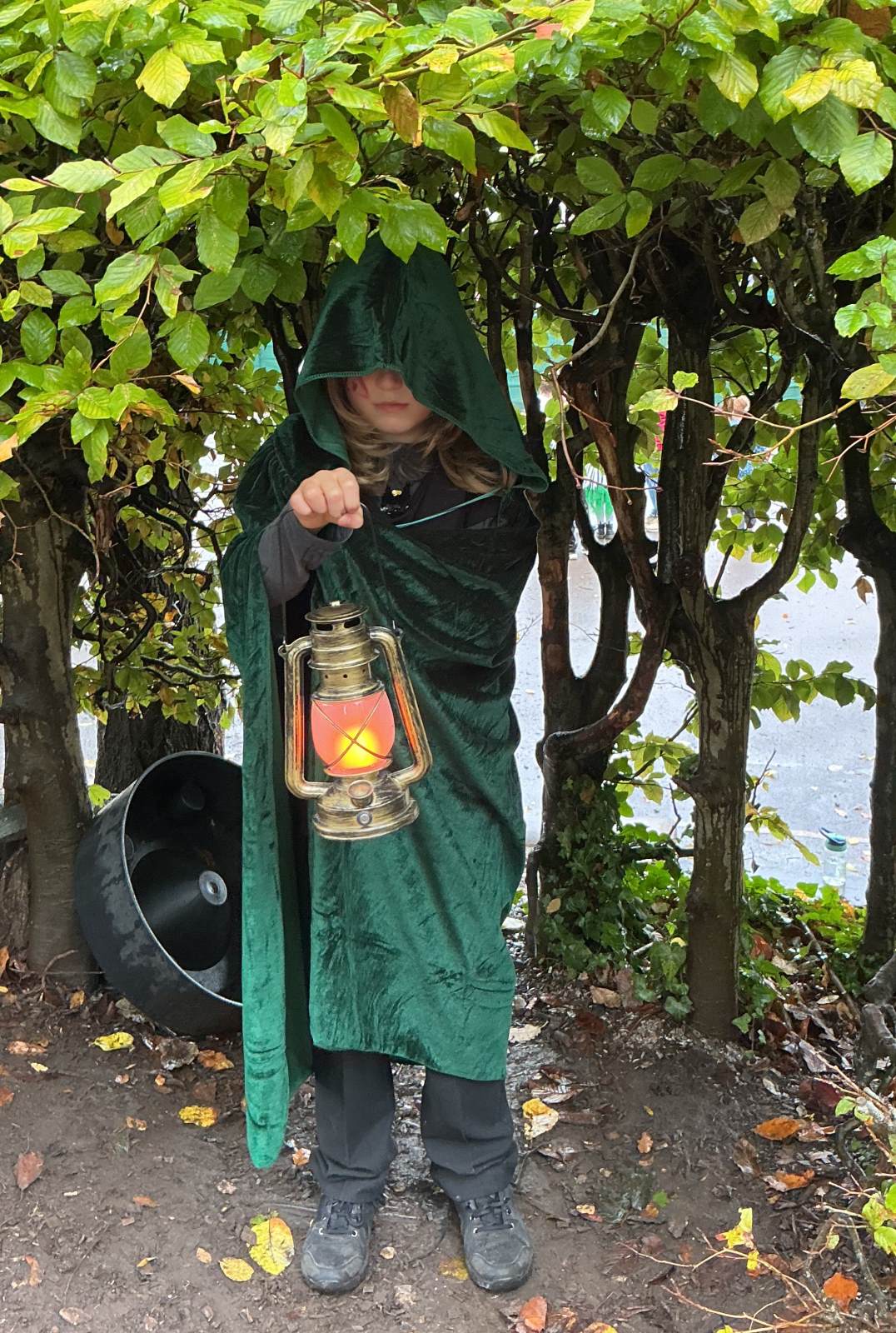
Mastery Play – Shaping and Controlling the Environment
Children enjoy making changes to their surroundings and developing a sense of control over the physical world.
How we provide for this:
- The sandpit provides opportunities for digging, moving and shaping materials.
- Water play encourages children to create channels, dams and waterways.
- The mud kitchen allows children to mix and transform natural materials.
- Planks, crates and loose parts provide opportunities for building larger structures.
- Giant building blocks encourage children to construct and adapt designs.
- Our den-building area allows children to create and change their own spaces.
Object Play – Handling and Manipulating Resources
Children explore objects and materials, learning about their properties and how they can be manipulated, moved and used.
How we provide for this:
- Giant building blocks for stacking, balancing and connecting.
- Loose parts for sorting, arranging and manipulating.
- Balls and hoops for exploring movement and coordination.
- Giant spinning tops for investigating rotation and balance.
- Sand and water equipment for pouring, scooping and transferring.
- Planks and crates for moving, positioning and constructing.
Role Play – Exploring Different Identities and Experiences
Children explore different roles and identities, imagining what it might be like to take on different responsibilities or become someone else.
How we provide for this:
- The mud kitchen provides opportunities to play chefs, restaurant owners and customers.
- Podley encourages children to create different characters and everyday scenarios.
- Den-building areas become homes, shops, offices and other imaginative settings.
- Loose parts and giant building blocks help children construct environments that support role play.
- Forest School provides opportunities for children to become explorers, adventurers and nature investigators.
Recapitulative Play – Connecting with Nature, History and the Past
Children explore aspects of human history, nature and traditional ways of living. They develop an understanding of the natural world and how people have interacted with their environment throughout time.
How we provide for this:
- Our Forest School area allows children to explore woodland environments and natural materials.
- Den building encourages children to explore traditional shelter-building and survival themes.
- Planks, crates and natural resources provide opportunities to construct shelters.
- Mud kitchen activities allow children to explore traditional food preparation and nature-based experiences.
- Trees and natural spaces encourage children to develop an appreciation of the environment.
- Storytelling and exploring the past help children make connections with different ways of life.
Our Commitment to Providing Rich Play Experiences
Our outdoor provision is not simply a collection of equipment. It is an environment full of possibilities, where children can make choices, follow their interests and create experiences that are meaningful to them.
We recognise that the same resource can support many different types of play, and that children will use our spaces in ways that adults may never have anticipated.
We aim to provide the time, freedom, resources and encouragement for children to make the most of every opportunity.
Our ambition is for every child to find something that inspires them, challenges them, excites them and makes them want to come outside and play.
We believe that childhood should be filled with opportunities to play, and that some of life's most important lessons are learnt along the way.